Behringer BMX: The Oberheim DMX Gets a Modern Sampling Makeover
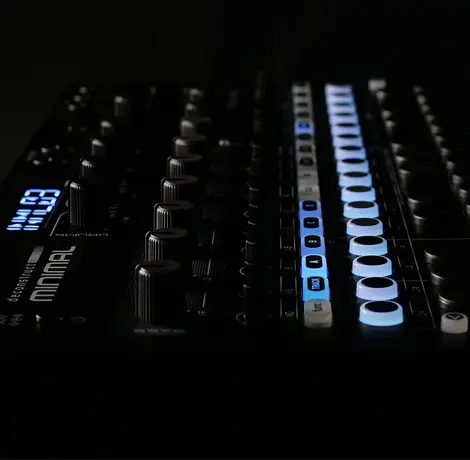
Behringer has officially released the BMX, a hybrid sampling drum machine that takes one of the most iconic rhythm machines of the 1980s - the Oberheim DMX - and rebuilds it for today's producers. The original DMX helped define the sound of early hip hop and new wave, powering tracks by Run-D.M.C. and New Order alike. Now Behringer is making that legacy accessible with modern additions like sampling, analog filters and a comprehensive sequencer.
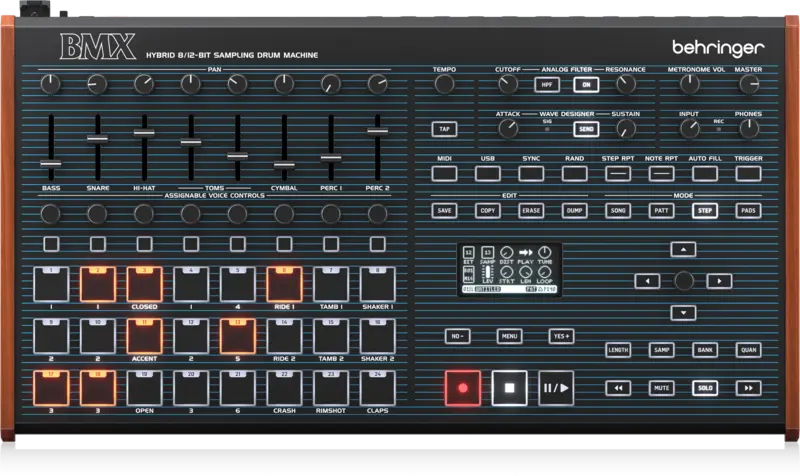
Classic Sounds, New Engine
The BMX ships with 25 built-in drum sounds drawn from the original DMX palette: 3 kicks, 3 snares, 3 hi-hats, 6 toms, 2 rides, 2 shakers, 2 tambourines, plus rimshot, handclap, crash and click. These sounds run through an 8/12-bit sound engine using eight dedicated DACs with variable sample rates, which gives the machine that crunchy, punchy character the DMX was known for.
But unlike the original, the BMX also functions as a sampler. There is a line input for recording your own sounds directly into the machine, which opens the door well beyond the factory kit. Combined with an integrated Wave Designer for shaping attack and sustain, and a dual-mode analog filter with frequency and resonance controls, there is plenty of room to sculpt each voice to your liking.
Hands-On Sequencing
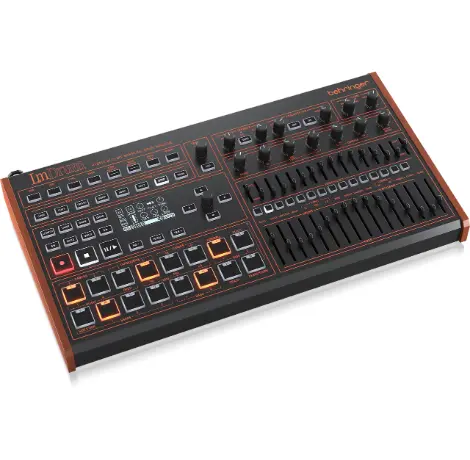
The BMX features an 8-voice architecture with 24 velocity-sensitive pads, each fitted with full-colour LEDs. Two sequencing modes are on offer: a high-resolution real-time sequencer with non-destructive quantisation for capturing finger drumming performances, and a step sequencer with up to 64 steps per pattern. The machine stores up to 256 patterns and 16 songs, with features like poly-meter, step-repeat and note-repeat built in. A Song Mode lets you chain patterns for live sets, while Auto Scroll keeps things flowing during improvisation.
Outputs and Connectivity
Following the DMX tradition, the BMX provides eight independent analog outputs so you can route each voice to its own channel in your mixer or DAW. There are also stereo main outputs, a headphone jack, trigger outs and sync I/O. MIDI is fully covered with In, Out and Thru connectors, and USB handles both MIDI and sync duties. You can clock the BMX from USB, MIDI, an external clock signal or its own internal tempo.
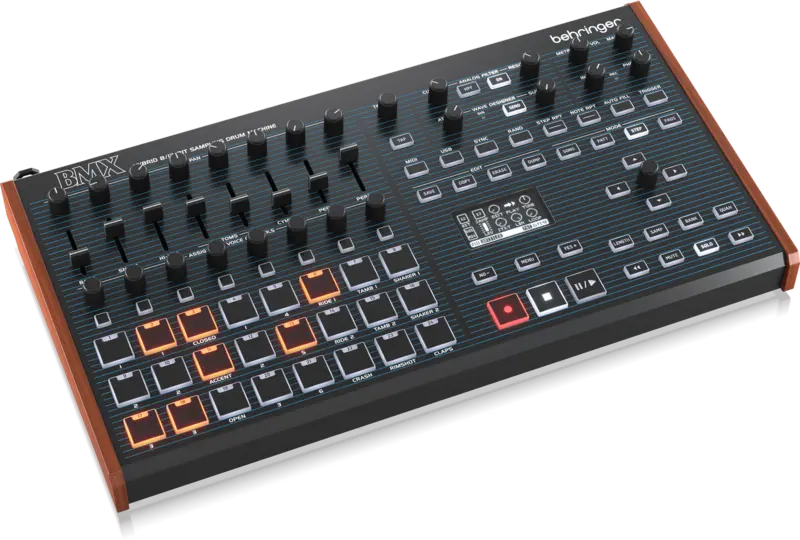
Form Factor
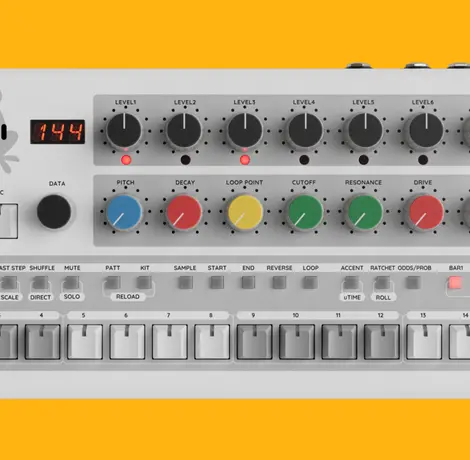
The BMX sits in the same desktop case format Behringer uses for the RD-8 and RD-9, so it should feel familiar to anyone who already owns one of those machines. The front panel features a 7-segment LED display for tempo, a dedicated tap tempo button, and per-track solo and mute controls for quick performance adjustments.
Availability
The Behringer BMX was first announced back in 2017, and production units were shown at NAMM 2026 in January. Pre-orders are now open, and the machine comes with a 3-year warranty. For anyone looking to get that classic DMX sound with the flexibility of sampling and modern connectivity, the BMX is an interesting option to keep an eye on.
More News