1010music Nanobox Lemondrop: Granular Synthesis in Your Pocket
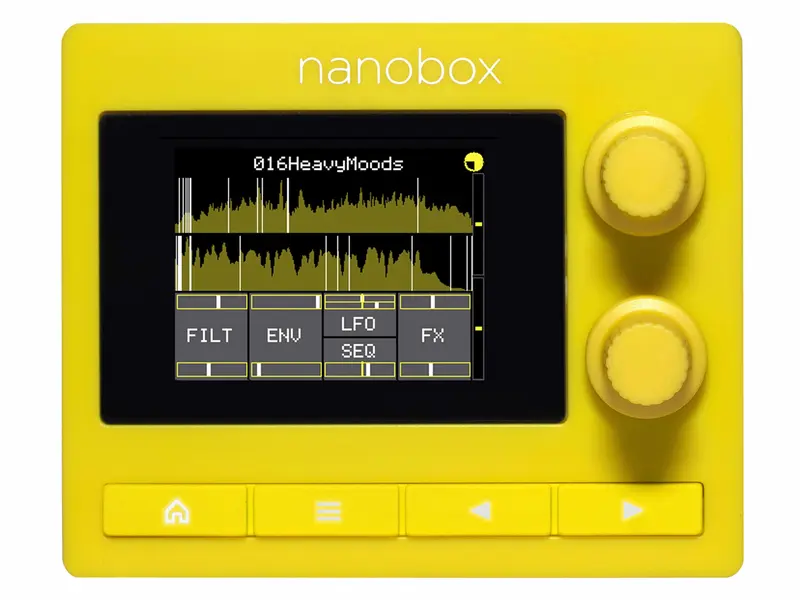
There's a particular kind of delight in discovering that a device this small can sound this deep. The 1010music nanobox lemondrop fits in the palm of your hand - smaller than a deck of cards, lighter than a smartphone - yet inside it runs a full-blown granular synthesizer with four-voice polyphony, dual grain oscillators, filters, envelopes, LFOs, a modulation sequencer, and six onboard effects. That's a lot to squeeze into 3.75 inches.
What Granular Synthesis Actually Does
Granular synthesis is one of those techniques that sounds complex in description but feels immediately intuitive when you hear the results. The idea is simple: take any audio sample, slice it into tiny fragments called grains - each just a few milliseconds long - and then scatter, layer, and manipulate those grains in real time. The result is something that can range from subtle textural shimmer to completely alien atmospheres, with the original source material transformed beyond recognition.
The lemondrop has two dedicated granulators, each with 30 seconds of sample memory and up to 16 grains playing simultaneously - that's 128 grains total across the whole voice. Parameters like grain size, density, position jitter, and pan randomisation give you precise control over the textural character. A third oscillator adds another layer of tonal material to blend in. Together, they can produce the kind of evolving, organic sounds that feel genuinely alive rather than static.
Touchscreen as Main Interface
With only two physical knobs and four buttons, the lemondrop puts its 2-inch touchscreen at the centre of everything. The X/Y pad on the home screen becomes a primary performance control - dragging your finger across it morphs sounds in real time, making subtle or dramatic shifts depending on what you've assigned to each axis. This approach works better than it sounds on paper. The visualisation of waveforms and modulation states on screen means you're never left guessing what's happening underneath.
The modulation sequencer stands out as a genuinely clever implementation. Rather than programming steps numerically, you draw patterns with your finger directly on screen - a 32-step curve that the synth then follows for whatever parameter you've assigned it to. It's an expressive and immediate way to create evolving sequences without entering a menu-heavy programming mode.
Sound Character
Where the lemondrop shines is in atmospheric territory - evolving pads, bell-like textures, spectral drones, and sounds that slowly mutate over time. Feed it recordings of acoustic instruments and the granulators will pull apart the source material into something unrecognisable but strangely beautiful. The six effects - flanger, distortion, chorus, phaser, delay, and reverb - are available in two slots, giving twelve possible combinations that can push things further into territory that feels more like a field recording than a synthesizer.
The 153 factory presets give a good indication of what the instrument does well: complex, textured, movement-heavy sounds that occupy a lot of sonic space. They're less suited to serving as background pads in a dense mix, but as centrepieces or atmospheric anchors, many are genuinely striking.
Small But Connected
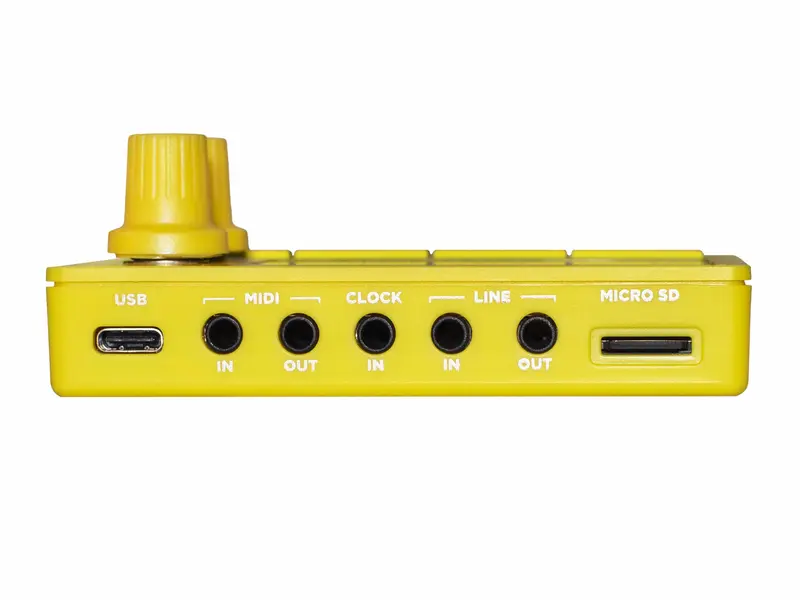
Despite its size, the lemondrop connects well with other gear. There's 3.5mm audio in and out, TRS MIDI in and a selectable MIDI out, plus a clock input that accepts multiple PPQ divisions. This means it fits comfortably into a hardware setup, responding to sequences from external devices or acting as a sound source controlled by a keyboard.
One limitation worth knowing about: there's no MIDI over USB. You'll need TRS MIDI cables and potentially a small interface if you want to control it from a computer or tablet. It's an odd omission for a device that already has a USB-C connector for power - though USB power itself can introduce audio noise when connected to computer ports, so a dedicated USB power supply is recommended.
The microSD card slot opens up the most interesting long-term prospect: loading your own audio files into the granulators. Any recording can become source material - field recordings, found sounds, samples from other synths. This is where the lemondrop becomes less of a preset machine and more of a genuinely personal instrument.
A Device That Rewards Patience
The lemondrop is not an instrument that immediately reveals everything it can do. The first hour with it might be spent just browsing presets, getting comfortable with the touchscreen navigation, and understanding how the oscillator and effect parameters relate to each other. But patience pays off. The more time you spend with it, the more clearly you see the logic of the architecture - and the more deliberately you can shape sounds rather than just stumbling across them.
What strikes me most about the lemondrop is the commitment to making granular synthesis genuinely portable. This isn't a cut-down or simplified version of the technique - it's the real thing, with depth that stands up to much larger dedicated instruments. If granular textures are part of your sound and you want something that goes with you everywhere, this is hard to argue against.
More News
Notes