Behringer LM Drum: Living with the LinnDrum Tribute
I've spent a fair amount of time over the past few weeks playing with the Behringer LM Drum, and I keep coming back to the same thought: this is a strange little box, in the best possible way. It tries to be two things at once - a faithful tribute to Roger Linn's iconic LinnDrum, and a modern hybrid sampler with the kind of features you'd want on stage today. Most of the time, it pulls it off.
If you've read my earlier note about the Behringer BMX, you'll already know how I feel about Behringer's recent run of vintage-inspired drum machines. The LM Drum sits right next to the BMX in spirit, but it has a slightly different personality - warmer, looser, less industrial. The DMX punches you in the chest. The LinnDrum, and by extension the LM Drum, sort of leans on your shoulder.
The Sound, First of All
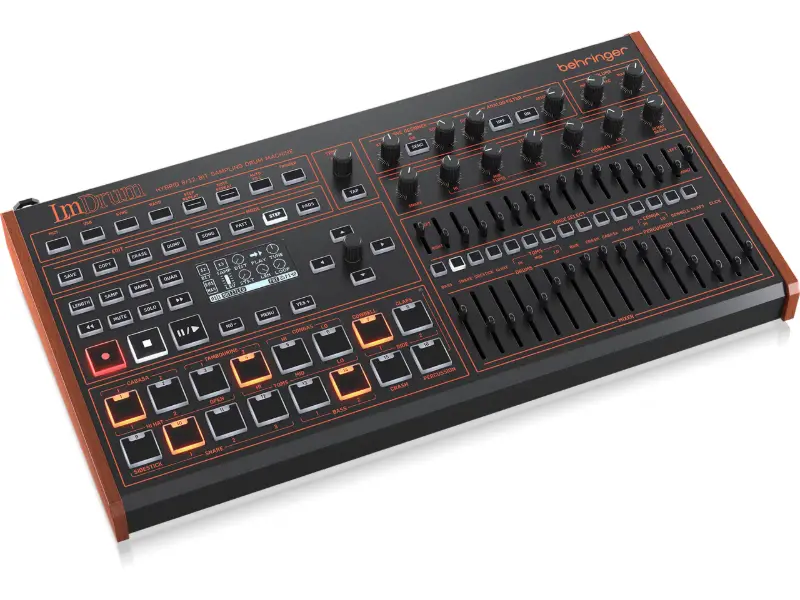
The LM Drum runs an 8/12-bit sampling engine that reproduces the grain and bite of the original LM-1 and LinnDrum. Behringer ships it with 109 sounds drawn from the classic editions, and on top of that the analog signal path uses real 3320 VCF and 2164 VCA chips - the same kind of filter and amp circuitry that gave so many 80s machines their character. You can hear it. Hi-hats have that crisp top end without sounding too clean, kicks have weight, and the snare snaps in a way that's hard to fake with software alone.
What surprised me more was the sampler side. There's a line input on the back, and you can record your own sounds straight into the machine. They're stored as 12-bit, 24 kHz mono - which sounds like a limitation until you actually try it. Drop a clean modern sample in and the machine bakes it into something instantly more usable. I sampled a clap from a recent track of mine and it came out sounding like it belonged on a 1983 record. That's not nostalgia talking, that's the converters doing their job.
A Sequencer That Wants to Perform
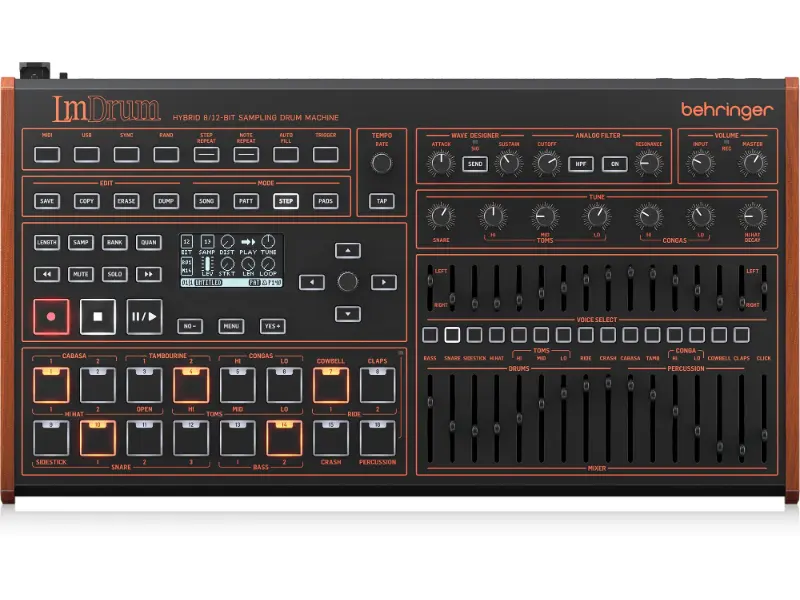
This is where the LM Drum stops being a pure tribute and starts being its own thing. The 64-step sequencer supports poly-metric patterns, which is great for anyone who likes their hi-hats and kicks to disagree about the bar length. You also get step repeats, note repeats, real-time triggers, and per-track mutes and solos. The 16 pads are velocity-sensitive with aftertouch, and they feel responsive enough that finger-drumming a pattern is genuinely fun rather than a chore.
I'm not going to pretend the workflow is perfect. Some of the more advanced features hide behind shift combinations, and there's a faint Roland-flavoured "press these three buttons together" rhythm to certain operations. The original LinnDrum's biggest charm was its immediacy - you sat down and you wrote a beat - and the LM Drum sometimes asks for a little more thinking than that. Still, once you've spent an evening with it, your fingers learn the shortcuts, and the muscle memory takes over.
Build, Connectivity, and Sitting It in a Studio
Sixteen simultaneous voices, each with dedicated level and pan, and an FX bus with Wave Designer plus a dual-mode analog filter you can apply selectively. There are individual voice outputs on the back, MIDI and USB, and the unit can store up to 8 songs and 128 patterns. None of that is unusual on paper, but having it all on one device, at this size, is genuinely useful.
Build quality is decent, not exceptional. A couple of my knobs feel a little loose - not catastrophically, just noticeably - and that's a complaint I've seen echoed in other reviews. The pads themselves are good, though, and that's the part you actually touch most.
Where It Sits Next to the BMX
If you're considering both, here's how I'd think about it. The BMX is brighter, harder, more rhythmic in the hip-hop and electro sense. The LM Drum is more musical, more melodic somehow - probably because the original LinnDrum was on so many pop records that its sound is wired into how we hear "the 80s". They're not quite competitors. They're more like a pair.
I wouldn't say the LM Drum replaces a real LinnDrum for anyone who has one and loves it. But for the rest of us - which is to say, almost everyone - this is the closest most of us will ever come to making music with that sound, and the sampling and modern sequencer make it more useful than the original ever was. After a few weeks, it's the box I reach for first when I want a drum part with character. That, more than anything, is what I think a good drum machine is supposed to do.
More News
Notes
Stylophone DS-2: A Drone Box That Fits in a Eurorack