Neutral Labs Scrooge: Five Voices That Would Rather Sound Broken
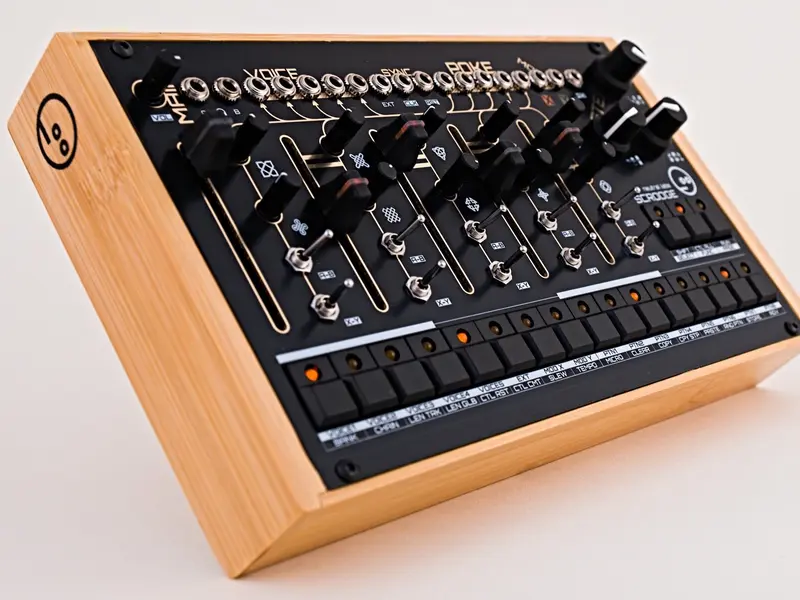
There's something refreshing about a synthesizer that refuses to behave. The Neutral Labs Scrooge - officially described as a 'sequenced malfunction generator' - is exactly that kind of instrument. It has five analog voices, a genuinely capable step sequencer, and a distinct preference for sounding wrong in interesting ways.
The Idea Behind the Malfunction
Neutral Labs, the German company also behind the Elmyra 2, built the Scrooge around an unusual design choice: the five analog voices don't have their own power supplies. Instead, they scrounge energy directly from the sequencer's control signals. This passive architecture, built around CMOS logic chips like the CD4069 and CD4093, is what gives the device its signature character.
The result is an inherently unstable sound. Voltages fluctuate, voices behave unpredictably at lower step rates, and the overall character shifts depending on how hard the sequencer is working. You can nudge it towards something like a kick drum or a hi-hat - but left to its own devices, it would much rather produce hollow crackles, metallic growls, and deeply distorted textures.
A Sequencer That Thinks for Itself
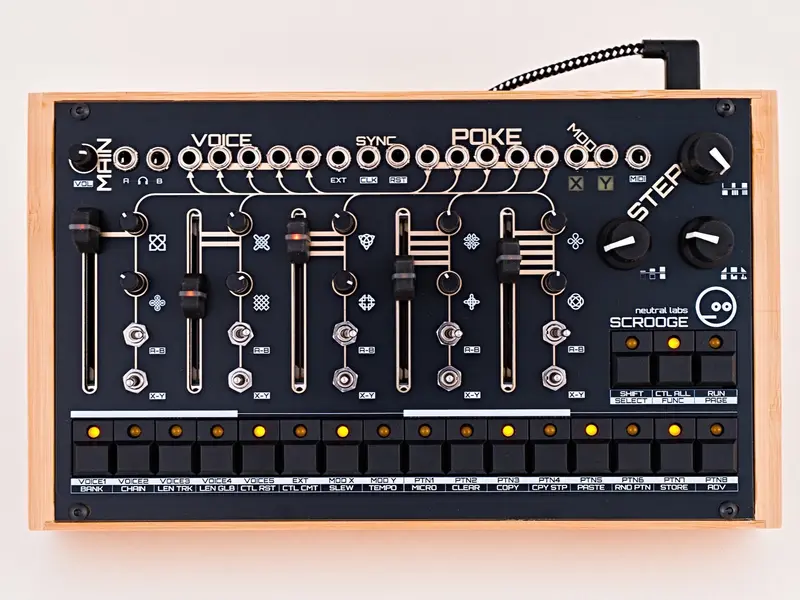
The sequencer built into the Scrooge is more capable than you might expect from a glitch-focused instrument. Each of the five voice tracks supports up to 64 steps, with per-step parameter locks, probability settings, ratcheting, and micro-timing. Two additional modulation tracks can be routed independently to any of the voices, which gives you a surprising amount of control over how things develop.
What I find particularly interesting is the built-in generative algorithm feature - the sequencer can introduce random variations to patterns in real time. For an instrument already prone to behaving unexpectedly, adding algorithmic unpredictability makes it feel genuinely alive. You can store up to 128 patterns across 16 banks and chain up to 32 of them together for longer, evolving compositions.
Passive by Design
One of the stranger aspects of the Scrooge is that it can operate without any internal power at all when driven by an external sequencer. This follows directly from the passive voice design - if the control signals are coming from outside, the voices respond to them regardless. It can also sequence external gear, making it a flexible node in a modular setup rather than just an endpoint.
The device is available in two formats: a 42HP Eurorack module and a standalone desktop unit powered by USB-C. An optional Della expander (3HP) adds CV and gate access to all eight sequencer tracks for deeper modular integration.
Who This Is For
There are plenty of drum machines out there that do tight, punchy, reliable percussion. The Scrooge is not trying to compete with any of them. This is a tool for musicians who find that 'correctness' gets in the way - people who build rhythmic patterns from noise, who enjoy sequences that mutate on their own, who want their beats to carry a kind of organic instability that clean circuits just don't produce.
Whether you think of it as a drum machine with serious attitude problems or a texture generator with rhythmic tendencies, the Scrooge has a clear point of view. And for the right kind of music - experimental electronics, industrial textures, anything that benefits from a bit of deliberate chaos - that broken, scrounging character is exactly what you need.