The Chip That Defined an Era, in Your Hands
There is something quietly wonderful about the AY-3-8910. It's a sound chip that most people alive today have heard without ever knowing its name - buried inside the ZX Spectrum, the Amstrad CPC, the Intellivision, and even (in a licensed variant) the Atari ST. It powered the bleeps and buzzes of an entire era of home computers and arcade machines. And the Twisted Electrons AY3 MK2 puts two of them on your desk, ready to play.
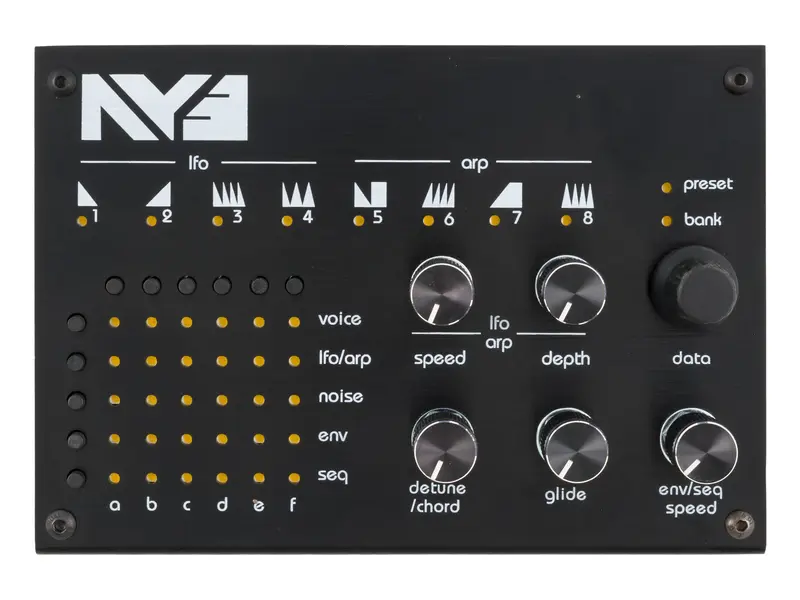
What I find interesting about the AY3 MK2 is that it doesn't try to hide what it is. This is not a synth that emulates the character of a chip or processes samples to sound "retro". It uses the actual AY-3 architecture - two chips, three voices each - giving you six-voice stereo polyphony with that unmistakable grainy, buzzy, lo-fi quality baked right in. You either love that sound or you don't, and if you do, there's really nothing else quite like it.
The hardware itself is compact and unpretentious. A 5x6 LED matrix display lets you navigate parameters and modulation assignments without scrolling through endless menus. You get 64 presets, a dedicated LFO, and a 16-step sequencer that handles gates, pitch, and noise independently - which opens up some genuinely interesting rhythmic textures. There are two main playing modes: six-voice unison with detune (which can get very wide and lush in a lo-fi sort of way), and six-note polyphony for proper chords and counterpoint.
The noise engine is one of the more underrated aspects of the AY3 chip, and the MK2 makes good use of it. Pitch-controlled noise, note-following on the envelope generators, and the ability to mix tonal and noise voices together means you can get well beyond the "video game beeps" territory if you want to, into stranger, more textural places.
In November 2025, Twisted Electrons released firmware 4.0 - nicknamed "Phoenix" - and made the whole codebase open-source on GitHub. It's a significant update: new clock modes that let the chips run at Atari ST or ZX Spectrum frequencies, sustain pedal support, improved voice allocation, AYMID protocol compatibility, and a set of 32 new creator presets alongside expanded user memory. The fact that it works on both the original MK1 and the MK2 is a nice touch, and the open-source decision feels in keeping with the spirit of the whole instrument - something made by people who actually care about this kind of sound.
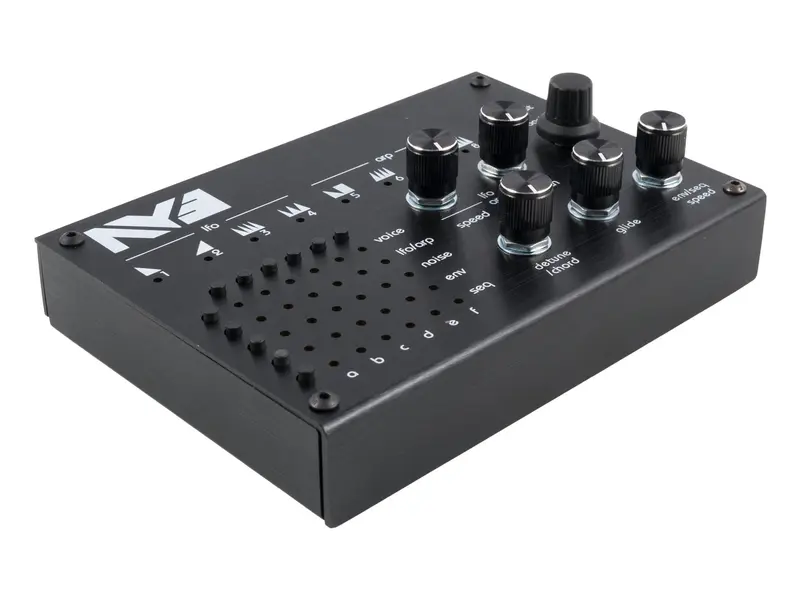
If you've spent any time digging into chiptune, tracker music, or early computer audio history, the AY3 MK2 will feel like a meaningful object. And if you're coming to it fresh, it's a surprisingly playable and characterful little synth - one that sounds like nothing else in your studio. Sometimes that's exactly what you need.
More News
Notes